How should Product and Engineering roll out a Feature in stages?
Roll out a Feature in stages by choosing an initial eligible group, defining what to observe, and setting expansion, pause and recovery rules before exposure. Product owns the customer scope and value decision; Engineering owns safe deployment, monitoring and technical recovery. A feature flag or canary can help, but neither substitutes for readiness checks, representative users or a workable plan for irreversible data changes.
Key takeaways
- Define who sees the first stage and why.
- Agree technical and customer signals before expansion.
- Keep a named owner able to pause or recover.
- Remove temporary controls after the rollout is complete.
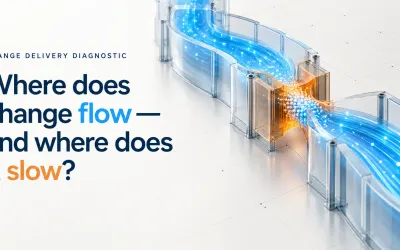
A Feature may pass release checks and still behave differently with real users, data and traffic. Exposing it to everyone at once increases the number of people affected by an unexpected fault or confusing journey. Staged rollout gives the team controlled exposure and an explicit point to learn before expanding.
Separate deployment from customer exposure
Staged rollout means making a change available to a bounded population or portion of traffic, learning from that exposure, then deciding whether to expand. Deployment and customer release may happen at different times. Martin Fowler’s feature-toggle account explains how flags can separate these events. A flag is one tool; a separate service route or operational cohort can also create stages. Choose the mechanism according to the architecture and the consequence of failure.
Start from existing release controls
Complete agreed quality, security, accessibility and operational checks before the first users encounter the Feature. Small exposure reduces potential reach but cannot make an unsafe change acceptable. Google SRE’s canary guidance describes evaluating a small initial release before wider traffic. Low volume or an unrepresentative cohort can conceal faults, so the first stage should be large and varied enough to answer the question without creating unjustified exposure.
Plan the stages as a joint decision
Product chooses the customer group, communication and minimum worthwhile journey. Engineering defines deployment order, telemetry, dependency behaviour and a recovery route. Agree what technical signals and customer reports will trigger expansion, pause or reversal, how long each stage needs to run, and who is authorised to act. Where data migration or external effects cannot be reversed, use stronger checks and a compensating recovery plan. Avoid treating a percentage rollout as a guarantee of safety.
Close the loop and clean up
At each checkpoint, compare observed behaviour with the agreed signals and inspect unexpected segments. Product decides whether the Feature is delivering enough value to expand; Engineering decides whether the technical conditions are safe. Record the decision and any remaining uncertainty. Feature flags add code paths and testing work, as Fowler notes, so remove temporary flags and dead paths when the rollout ends. Keep permanent operational controls only with an owner and maintenance plan.
Example
Hypothetically, a travel platform adds a booking amendment journey. Product starts with bookings from one supported supplier and prepares customer support guidance. Engineering deploys behind a flag, verifies both flag states and watches failed amendments, latency and downstream settlement. After a short observation period, Product checks completion and support contacts. The team expands only when the chosen signals remain acceptable; if settlement mismatches appear, Engineering pauses exposure and follows the recovery plan.
FAQs
-
Is a feature flag required?
No. It is one way to control exposure; the mechanism should fit the product and architecture.
-
Does a small first cohort prove the Feature is safe?
No. Rare paths, larger loads and excluded user groups may still reveal problems later.
-
Who decides to expand?
Product and Engineering should agree an explicit checkpoint: Product judges customer value and scope, while Engineering judges technical safety.