How should a product team manage feature flags throughout their lifecycle?
Manage each feature flag as a temporary product and engineering control with a stated purpose, owner, allowed states and removal condition. Test the relevant flag states, record who can change exposure, monitor actual user experience and remove the flag and obsolete code once its purpose ends. Long-lived operational flags need explicit ownership and periodic review.
Key takeaways
- Record whether the flag supports release, experimentation or an enduring operational control.
- Control who can change it and document safe default behaviour.
- Test important states and observe which users receive each state.
- Retire temporary flags and their branching code as planned work.
Flags help teams expose a change to a small group or stop an unsafe path without a new deployment. Over time, however, forgotten switches can make behaviour hard to explain, test and support. A team needs a lifecycle for the flag itself as well as a plan for the feature it controls.
Define the flag before adding it
Write down the flag’s purpose, owner, affected journey, default state and condition for removal. A release flag that separates deployment from exposure usually has a short life. An experiment flag needs stable allocation and a measure that can interpret the groups. An operational kill switch may remain longer, but requires regular testing and clear authority. Product owns exposure and customer consequences; Engineering owns safe implementation and technical behaviour.
Use established rollout controls
Teams have long used staged deployments, configuration and manual release steps to control exposure. A feature flag adds a runtime choice, but the code behind both states still needs validation. Keep flag evaluation near the decision it controls and avoid a maze of nested switches. Record who can change production state and the expected response if a configuration service fails. Treat permissions and data migration separately: hiding a button does not reverse a schema change or secure an API.
Operate and observe the flag
Test the default and enabled states, including users who change cohorts and sessions. Monitor behaviour by cohort where possible, and make current flag state visible to support and incident responders. Decide in advance who may pause or expand exposure and what evidence triggers action. AI may help find flag references or draft a removal checklist, but a human engineer must verify code paths, dependencies and production behaviour.
Close the lifecycle
When exposure is complete or an experiment ends, decide which behaviour stays. Remove temporary configuration, branch logic and tests for the discarded state in a normal reviewed change. Leave a durable record of the decision rather than preserving the toggle indefinitely. Periodically audit flags without owners or expiry dates. An enduring operational switch should have a rehearsal schedule so it still works when needed.
Example
Hypothetically, a team introduces a new checkout view behind a release flag. Product agrees a small initial audience and a stop condition for failed payments. Engineering tests both views, records the current setting for support and restricts production changes to named staff. After the rollout, the team removes the old view and the temporary flag in a reviewed change.
FAQs
-
Can a flag replace a deployment rollback?
No. It can stop a guarded path, but it cannot undo every database, interface or background change.
-
Should every flag have an expiry date?
Temporary flags should have a removal condition and review date. Durable operational controls need an owner and a regular test.
-
Who should be able to change a production flag?
Grant the smallest practical set of authorised people and keep an auditable record of changes.
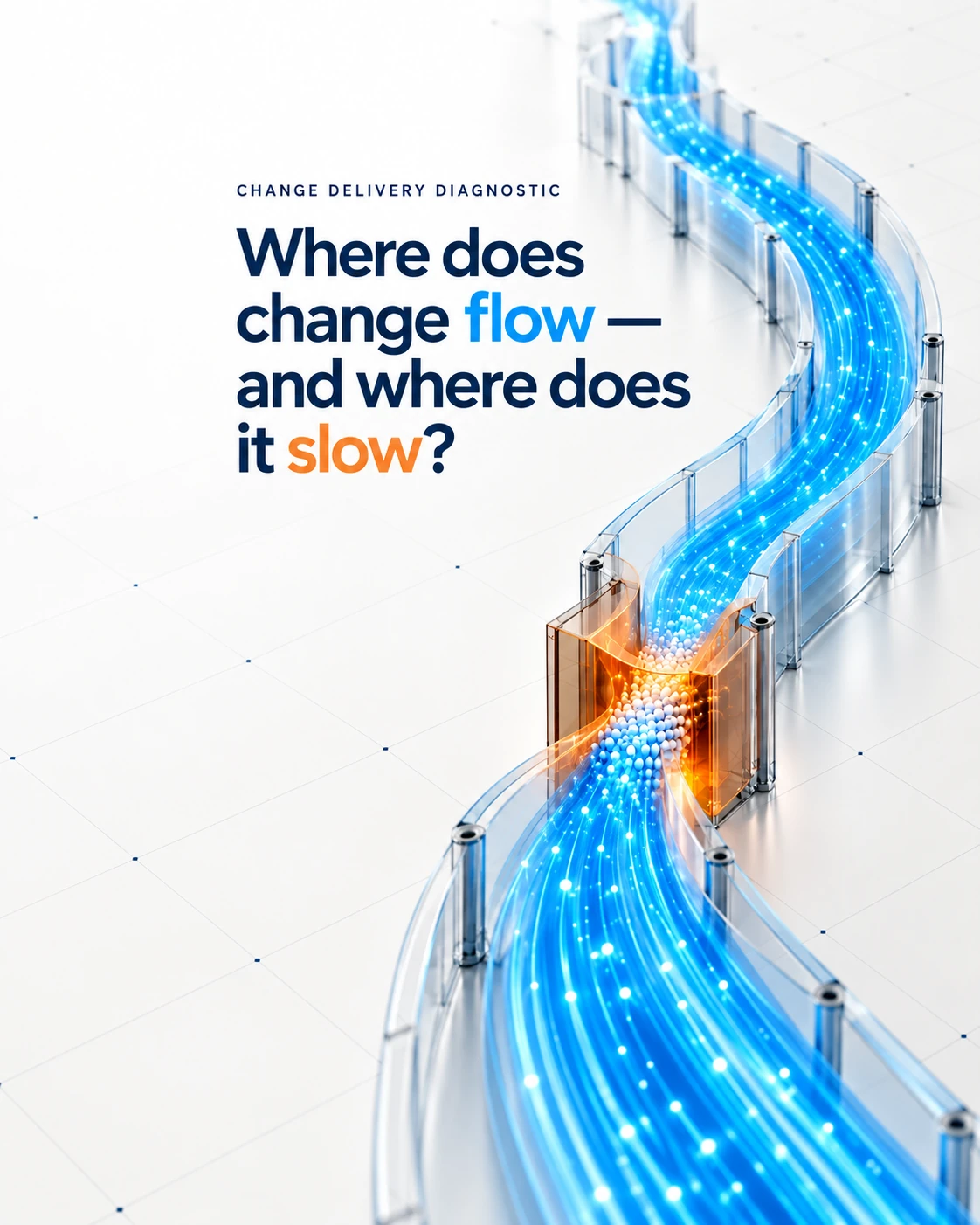
Is the way you deliver fit for a world of continuous change?
Find out where change flows — and where it slows.