Where can AI support software engineering today?
AI can support software engineering across understanding, coding, testing, review, documentation and operational analysis. Its value depends on the task, context, feedback and controls rather than the lifecycle label alone. Start with bounded work, measure the whole delivery effect and retain accountable human judgement.
Key takeaways
- AI can assist many engineering activities, but performance varies by task and environment.
- Understanding and verification are as important as generation.
- Good context, automated feedback and clear standards improve the usefulness of AI output.
- Adoption should follow measured outcomes, quality and risk rather than tool usage.
AI-assisted engineering is often described as code generation. That is only one part of the opportunity. Engineers spend time understanding systems, exploring options, writing and reviewing changes, testing behaviour, maintaining documentation and investigating production issues.
AI can contribute across this work, from small suggestions to agent-led sequences. The practical question is where it improves the team's end-to-end ability to deliver and learn without weakening security, quality or ownership.
Use AI to understand and explore
AI can explain unfamiliar code, summarise repository structure, trace likely dependencies, translate between languages or frameworks and help formulate technical questions. It can compare implementation options, draft diagrams or identify areas that warrant investigation. This can shorten orientation, especially when the user can validate the explanation against source code and documentation.
The limitations matter. A model may lack relevant files, runtime evidence or historical decisions. It may give a coherent explanation that misses an indirect dependency or intentional exception. Treat its analysis as a navigational aid, then inspect the authoritative artefacts and test important assumptions.
AI can also help make existing knowledge easier to retrieve, but it should not become a reason to neglect durable documentation or concentrate knowledge in a proprietary interface.
Assist implementation and maintenance
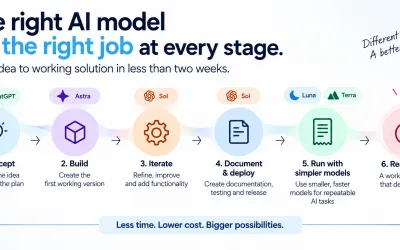
Coding assistance ranges from completing a line to producing a bounded change across several files. Useful applications can include routine transformations, familiar framework patterns, test fixtures, migration scripts, refactoring and documentation updates. Agents may plan work, edit files and run tools within a controlled environment.
Suitability depends on clarity, codebase context, established patterns, test quality, reversibility and consequence. Generated code can be syntactically convincing while being insecure, inefficient or inconsistent with the architecture. GitHub's responsible-use guidance explicitly retains the need for review, testing and secure coding practice.
Engineers should provide intent, constraints and acceptance evidence, not merely ask for more code. Keep changes small enough to understand, and examine dependencies, error handling, data behaviour and operational impact.
Strengthen testing review and documentation
AI can propose test cases, boundary conditions and failure scenarios; generate initial unit or integration tests; explain a diff; and look for common defects. It can draft release notes, runbooks, decision records and API documentation from reviewed changes. These uses may release attention and broaden routine coverage.
Generated tests are not independent proof when they inherit the same misunderstanding as generated implementation. GitHub notes that AI-generated tests may omit scenarios. Review whether a test expresses required behaviour, fails when it should and covers material risks. Similarly, AI review can supplement but should not automatically replace accountable human review.
Documentation must be checked against the current system and maintained. Producing more text creates little value if engineers cannot trust or find it.
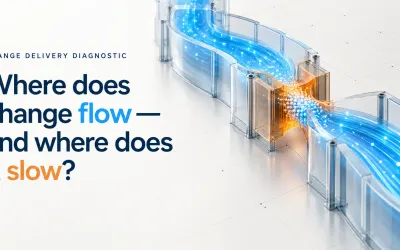
Apply AI within an observable delivery system
Operational uses include summarising logs, grouping incidents, suggesting diagnostic paths and drafting post-incident material. Access to production data and actions raises the consequence of mistakes, so permissions, confidentiality, audit records and human approval require particular care.
Introduce AI through representative work with a baseline. Measure lead time, total human effort, rework, escaped defects, security findings, maintainability, developer experience and product outcomes where relevant. Include time spent preparing context and checking output. DORA's 2025 research describes AI as amplifying the surrounding organisational system, so weak feedback or fragmented work may also be amplified.
Build a portfolio of evidenced uses rather than one organisation-wide rule. Retire uses that create hidden review work, and expand towards adjacent tasks when the result and controls justify it. Capabilities change quickly; the team's responsibility to understand and operate its software does not.
Example
A service team trials AI in three areas: explaining a legacy integration, generating tests for a familiar validation component and summarising non-sensitive incident logs. Engineers verify the integration explanation against code and monitoring, add missing boundary cases to the tests and restrict operational access to read-only data.
The team measures total effort, review findings and escaped defects. Test generation proves useful, incident summaries need substantial correction, and the legacy explanation helps orientation but cannot support an architectural decision alone. The team expands only the evidenced use and improves context for the others.
FAQs
-
Does AI-assisted engineering only help developers?
No. Testers, architects, platform specialists, security practitioners and other team members may use AI for analysis, documentation or review. The value and controls depend on the task, access and professional accountability.
-
Should every engineer use the same AI tool?
Shared tools and policies can reduce risk and fragmentation, but one tool may not suit every language, environment or work type. Evaluate approved options against real needs and keep the engineering standards consistent.
-
How do we know whether an AI use case is valuable?
Compare end-to-end flow, human effort, quality and outcomes with a relevant baseline. Usage, prompts or generated lines do not demonstrate useful capacity by themselves.
AI for Product
Learning modules designed to develop practical AI capability for product people