What Is Lloyd's Delegated Data Manager?
Lloyd's Delegated Data Manager, commonly called DDM, is a central platform for collecting, transforming, validating and distributing delegated authority risk, premium and claims data. It maps varied bordereaux into agreed reporting standards and routes information to authorised market participants. Submitters and managing agents still own mapping decisions, exceptions and the fitness of data for use.
Key takeaways
- DDM standardises delegated reporting across varied bordereaux.
- Reporting channels connect source fields to agreed standards.
- Validation supports quality but does not remove data ownership.
- Current operating guidance should be used for access and configuration.
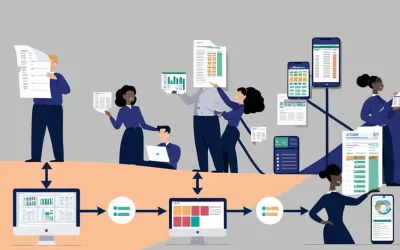
Coverholders and delegated claims administrators often produce risk, premium and claims data from local systems. The source spreadsheets can use different layouts, headings and structures even when they describe the same insurance concepts.
Lloyd's Delegated Data Manager provides a shared workflow for turning those submissions into standardised information and distributing it to authorised market participants.
Understanding that workflow helps teams distinguish what the platform automates from the mapping, correction and oversight decisions that remain with people.
DDM provides a shared reporting workflow
Delegated Data Manager, usually shortened to DDM, is a central bordereaux processing platform. Lloyd's introduced it to support collection, validation and processing of delegated authority risk, premium and claims data.
The platform addresses a recurring market problem. A managing agent may participate in many binders and receive files from many organisations. Maintaining separate manual processes for every layout makes consistent reporting and control difficult.
DDM creates a shared route from source submission to standard data. It also controls distribution according to binder participation and user access, so market participants receive the information relevant to them.
Reporting channels turn source files into standard data
A reporting channel describes how a particular source bordereau should be interpreted. It identifies the relevant sheet and header, maps source columns to standard fields and applies transformation or validation rules.
When a file is submitted, DDM uses that configuration to convert the source data into fields aligned with the applicable Coverholder Reporting Standards. Users review validation results and resolve issues before the data progresses through the workflow.
This is more flexible than requiring every coverholder to operate the same source system. It also depends on the channel being correctly designed. If a source heading has been misunderstood or the file structure changes, consistent processing can produce a consistent error.
Automation reduces repetitive processing
DDM can automate repeated interpretation and validation once a reporting channel has been configured. Standard mappings, controlled formats and rules reduce the need to rekey every bordereau and help create consolidated data for authorised recipients.
The transformation technology may separate combined values, map local fields or apply established rules. Similar AI-supported approaches can help interpret varying terminology and identify likely mappings where source formats change.
Automation is most useful when it exposes its result and exceptions. Low-confidence mappings, changed headers and values that fail business rules need review. Experienced users remain responsible for deciding what the source means and whether a proposed correction is appropriate.
Platform validation does not replace ownership
A file passing platform checks is not automatically suitable for every downstream purpose. Validation can confirm required formats, values and relationships covered by configured rules. It may not detect that a plausible value is wrong for the underlying contract or transaction.
Coverholders and DCAs remain responsible for the quality and meaning of submitted data. Managing agents need suitable oversight of reporting, mappings, exceptions and use. Changes to a source layout, binder or reporting standard should pass through controlled review.
DDM features, access routes and operating instructions can change. Users should therefore rely on current Lloyd's and LIMOSS guidance for configuration and support rather than treating a general explanation as a system manual.
Example
A hypothetical coverholder submits monthly risk and premium bordereaux in its established spreadsheet layout through a configured DDM reporting channel.
The channel identifies the transaction sheet, maps local columns to standard reporting fields and applies validation rules. One new source heading cannot be mapped confidently, and several values conflict with the expected contract section.
The coverholder and managing-agent data team review the exceptions, update the controlled mapping and retain evidence of the decision. Accepted data is then available to authorised participants.
FAQs
-
Is DDM a bordereaux template?
No. DDM is a platform and workflow. A reporting channel can transform a coverholder's established source format into agreed standard fields, although standard templates may also support consistent reporting.
-
Does DDM guarantee that submitted data is correct?
No platform can guarantee factual correctness. DDM applies configured transformations and validations, while submitters and managing agents remain responsible for mapping decisions, exceptions and fitness for downstream use.
-
Where should users find current DDM instructions?
Users should consult the current Lloyd's and LIMOSS DDM guidance and support routes. Access, configuration and feature details can change, so an explanatory article should not be treated as an operating manual.